

Regular scissor lift platform maintenance is essential for safe operation, reliable performance, and longer equipment life. A well-maintained scissor lift is less likely to experience unexpected downtime, control failure, hydraulic problems, or structural damage.
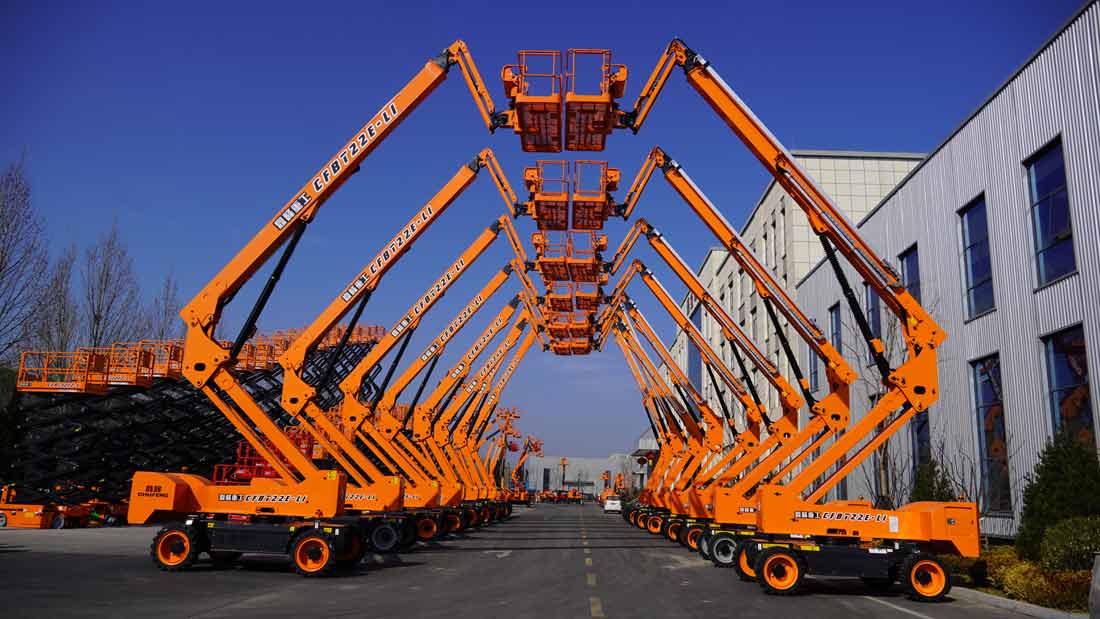
Maintenance requirements vary by model, power source, operating environment, and manufacturer. Operators should always follow the equipment’s operation and service manuals. The practical recommendations below provide a useful framework for maintaining electric, diesel, slab, and rough-terrain scissor lift platforms.
Why Scissor Lift Maintenance Matters
Scissor lifts operate under heavy loads and repeated lifting cycles. Without proper maintenance, small problems can develop into serious equipment failures.
A consistent maintenance program can help:
Reduce unexpected breakdowns
Extend the service life of major components
Improve platform and driving performance
Reduce repair costs
Support workplace safety
Maintain manufacturer and regulatory compliance
Improve equipment resale value
OSHA recommends regular maintenance, pre-use inspections, control checks, guardrail inspections, and brake verification for scissor lifts. OSHA Scissor Lift Safety Guidance
1. Follow the Manufacturer’s Maintenance Schedule
The operator’s manual and service manual should be the primary references for maintenance. They specify the correct inspection intervals, lubricants, fluid types, torque settings, replacement parts, and testing procedures.
Maintenance schedules may include:
Daily or pre-shift inspections
Weekly checks
Monthly service
Hour-based maintenance
Annual inspections
Load or function testing
Battery or engine servicing
Do not assume that every scissor lift has the same maintenance requirements. Electric models, diesel models, and rough-terrain scissor lifts may use different components and service intervals.
2. Complete a Pre-Use Inspection
A pre-use inspection should be completed before each shift or work cycle. This inspection helps identify visible damage and operating problems before the lift is placed into service.
Check the following items:
Platform deck and extension deck
Guardrails, gates, and toe boards
Scissor arms and pivot points
Hydraulic hoses and fittings
Tires, wheels, and wheel fasteners
Brakes and steering
Platform and ground controls
Emergency stop switches
Alarms and warning lights
Battery, fuel, and fluid levels
Safety decals and capacity labels
Test the lift’s basic functions in a safe area. If a safety-critical fault is found, stop using the machine, report the issue, and prevent unauthorized operation until repairs are completed.
3. Inspect the Platform and Guardrails
The platform is exposed to impact, vibration, materials, and weather. Inspect the deck for cracks, bent sections, corrosion, loose panels, and slippery contamination.
Guardrails should be checked for:
Bent or damaged rails
Loose fasteners
Missing sections
Damaged gate latches
Missing toe boards
Unauthorized modifications
Operators must remain inside the guardrail system and should never stand on the rails to gain additional height. OSHA recommends verifying that guardrails are in good working condition before operating the lift. OSHA Working Safely with Scissor Lifts
4. Maintain the Scissor Arms and Lifting Mechanism
The scissor arms support the platform and experience significant mechanical stress during operation. Inspect them for cracks, bending, corrosion, worn pivot points, and loose or missing hardware.
Maintenance personnel should also examine:
Pivot pins and bushings
Retaining clips
Welds and structural joints
Lift cylinders
Hydraulic hoses
Hydraulic valves
Lift cut-out systems
Platform leveling systems
Never work beneath a raised platform unless the manufacturer’s approved safety prop, blocking, or support procedure is correctly in place. Never use improvised supports.
5. Check the Hydraulic System
Hydraulic systems are used on many scissor lifts to raise and lower the platform. Hydraulic maintenance typically involves checking fluid levels, hoses, fittings, cylinders, and signs of leakage.
Look for:
Oil stains beneath the machine
Wet or damaged hoses
Loose fittings
Scratched cylinder rods
Unusual platform drift
Slow or uneven lifting
Abnormal lowering speed
Hydraulic fluid should be replaced or topped up only with the type specified by the manufacturer. Do not mix incompatible fluids. A suspected high-pressure leak should be handled by qualified service personnel.
6. Maintain Batteries and Electrical Components
Electric scissor lifts require careful battery and electrical-system maintenance. Proper battery care can improve operating time and reduce premature replacement costs.
Maintenance tasks may include:
Checking battery charge levels
Inspecting cables and connectors
Cleaning corrosion from terminals
Checking battery water levels when applicable
Inspecting chargers and charging cables
Keeping battery compartments clean and dry
Following the correct charging procedure
Do not operate a lift with damaged cables, exposed wiring, overheating components, or unusual electrical odors. Battery charging should take place in an approved area with suitable ventilation and according to the manufacturer’s instructions.
7. Service Diesel Engines and Fuel Systems
Diesel scissor lifts require additional engine and fuel-system maintenance. Service intervals vary, but common tasks may include:
Checking engine oil
Replacing oil and fuel filters
Inspecting coolant levels
Checking air filters
Inspecting belts and hoses
Checking fuel lines and tanks
Inspecting exhaust components
Removing water or contamination from the fuel system
Diesel maintenance should be completed in a well-ventilated area. Fuel spills should be cleaned promptly, and the machine should not be operated if there is a fuel leak or serious exhaust-system problem.
8. Inspect Tires, Wheels, and Brakes
Tires and wheels directly affect traction, stability, steering, and braking. This is especially important for rough-terrain scissor lifts used on uneven outdoor surfaces.
Inspect for:
Cuts, punctures, and severe wear
Low or uneven tire pressure
Damaged rims
Loose wheel bolts
Worn drive components
Brake problems
Steering irregularities
Test the service brake and parking brake in a safe area. The lift should stop smoothly and remain stationary when parked. OSHA identifies brake verification as part of scissor lift maintenance and inspection practices. OSHA Maintenance Recommendations
9. Lubricate Moving Parts Correctly
Proper lubrication reduces friction and wear at pivot points, rollers, hinges, and other moving components.
Always use:
The lubricant specified by the manufacturer
The correct quantity
Clean tools and fittings
A regular lubrication schedule
Before lubricating, remove dirt and debris from grease points. Excess grease can attract dust and create additional wear, especially on equipment used in construction or rough-terrain environments.
10. Test Controls and Safety Devices
A scissor lift’s safety systems must remain fully operational. Maintenance personnel should test the following according to the service manual:
Platform lift and lower controls
Ground controls
Emergency stop buttons
Emergency lowering system
Tilt alarms
Overload indicators
Drive and lift cut-outs
Steering controls
Horn and audible alarms
Gate or interlock systems
Pothole protection devices
Never bypass or disable a safety device to keep the machine operating. If an alarm, sensor, or interlock fails, remove the lift from service until it has been properly repaired.
Scissor Lift Maintenance Schedule
| Maintenance Interval | Recommended Checks |
|---|---|
| Before every use | Visual inspection, controls, brakes, guardrails, tires, alarms, leaks |
| Weekly | Battery or engine checks, lubrication points, fluid levels, fasteners |
| Monthly or hour-based | Hydraulic system, structural components, electrical system, wheel assemblies |
| Periodically | Detailed service inspection and component testing |
| Annually | Qualified inspection based on the manufacturer’s manual and local requirements |
This schedule is a general guide only. The manufacturer’s service schedule always takes priority.
Safe Practices During Maintenance
Maintenance work can create additional risks, especially around stored hydraulic energy, batteries, engines, and raised platforms.
Before beginning maintenance:
Park the lift on a stable surface.
Lower the platform completely when possible.
Turn off the power and remove the key.
Apply lockout or isolation procedures when required.
Use the manufacturer-approved maintenance prop or support system.
Keep unauthorized personnel away from the work area.
Use appropriate personal protective equipment.
Test the equipment after service in a controlled area.
After maintenance, reinstall all guards, covers, safety devices, and protective components before returning the machine to operation.
When to Remove a Scissor Lift from Service
A scissor lift should be removed from service when it has:
A hydraulic or fuel leak
Damaged guardrails
Non-functioning emergency controls
Brake or steering problems
Cracked or bent structural components
Damaged tires or wheels
Faulty alarms or sensors
Exposed electrical wiring
Unusual noises or vibration
Uncontrolled platform movement
Tag the equipment clearly and notify the responsible supervisor or maintenance department. Only qualified personnel should approve the machine for return to service.
Frequently Asked Questions
How often should a scissor lift be serviced?
A scissor lift should be inspected before every use and serviced according to the manufacturer’s time- or hour-based maintenance schedule.
Can operators perform scissor lift maintenance?
Operators can usually perform basic inspections and routine checks after receiving proper training. Technical repairs, hydraulic work, electrical repairs, and structural maintenance should be completed by qualified personnel.
What is the most important part of scissor lift maintenance?
A complete pre-use inspection is one of the most important daily maintenance practices. It helps identify safety-critical problems before the machine is operated.
How do I maintain an electric scissor lift?
Keep the batteries charged and clean, inspect cables and connectors, maintain the charger, check warning systems, and follow the battery procedures in the manufacturer’s manual.
Conclusion
Effective scissor lift platform maintenance combines daily inspections, scheduled servicing, proper lubrication, component testing, and safe repair procedures. Maintaining the platform, guardrails, lifting mechanism, hydraulic system, power source, tires, brakes, and safety controls can improve both equipment reliability and job-site safety.
A written maintenance checklist and accurate service records make it easier to identify recurring problems and plan repairs before they result in costly downtime. Always follow the manufacturer’s instructions and applicable local regulations for the specific scissor lift platform being used.
Maintenance requirements vary by model, manufacturer, power source, and operating environment. Always consult the official operation and service manuals before performing maintenance.